

How Can Video Games Be Bad for You? The Brain Science Behind Gaming Harm
Jean Willame
Summarize with AI
How Can Video Games Be Bad for You? The Brain Science Behind Gaming Harm
Let's be real. You didn't click this article because your mom told you that "screens will rot your brain." You're here because you feel it.
You feel the brain fog after a 8-hour League session. You feel the gap widening between where you are in life and where you want to be.
We aren't here to lecture you.
If you’re wondering "how can video games be bad for you," the answer isn't just about strained eyes or bad posture. It’s about how modern gaming loops are engineered to exploit your biology, leaving you with a stat sheet that’s impressive in-game but nerfed in real life.
Here is the science of what’s actually happening to your hardware (brain) and software (mind).
1. The Dopamine Hijack (Why Nothing Else Feels Fun)
The most dangerous effect of gaming isn't violence; it's dopamine dysregulation.
Video games—especially competitive shooters and MMOs—are essentially high-frequency dopamine dispensers. Every kill, loot drop, and rank-up triggers a hit of reward chemicals in your brain.
When you game for hours every day, you flood your receptors. Your brain, trying to maintain balance (homeostasis), responds by lowering your baseline sensitivity.
The result?
- Real-life achievements (reading a book, working out, learning a skill) feel painfully boring.
- You lose the motivation to grind for long-term goals because they don't offer instant feedback.
- The Science: This is similar to the mechanism seen in substance dependency. Your brain rewires itself to prefer the "cheap" dopamine of gaming over the "expensive" dopamine of real effort.
Key Insight: You aren’t lazy. Your reward system has just been min-maxed for a virtual world, making the real world feel unplayable.
2. The "AFK From Life" Effect (Opportunity Cost)
In economics, Opportunity Cost is the loss of potential gain from other alternatives when one alternative is chosen. In gaming terms: You can't level up two characters at once.
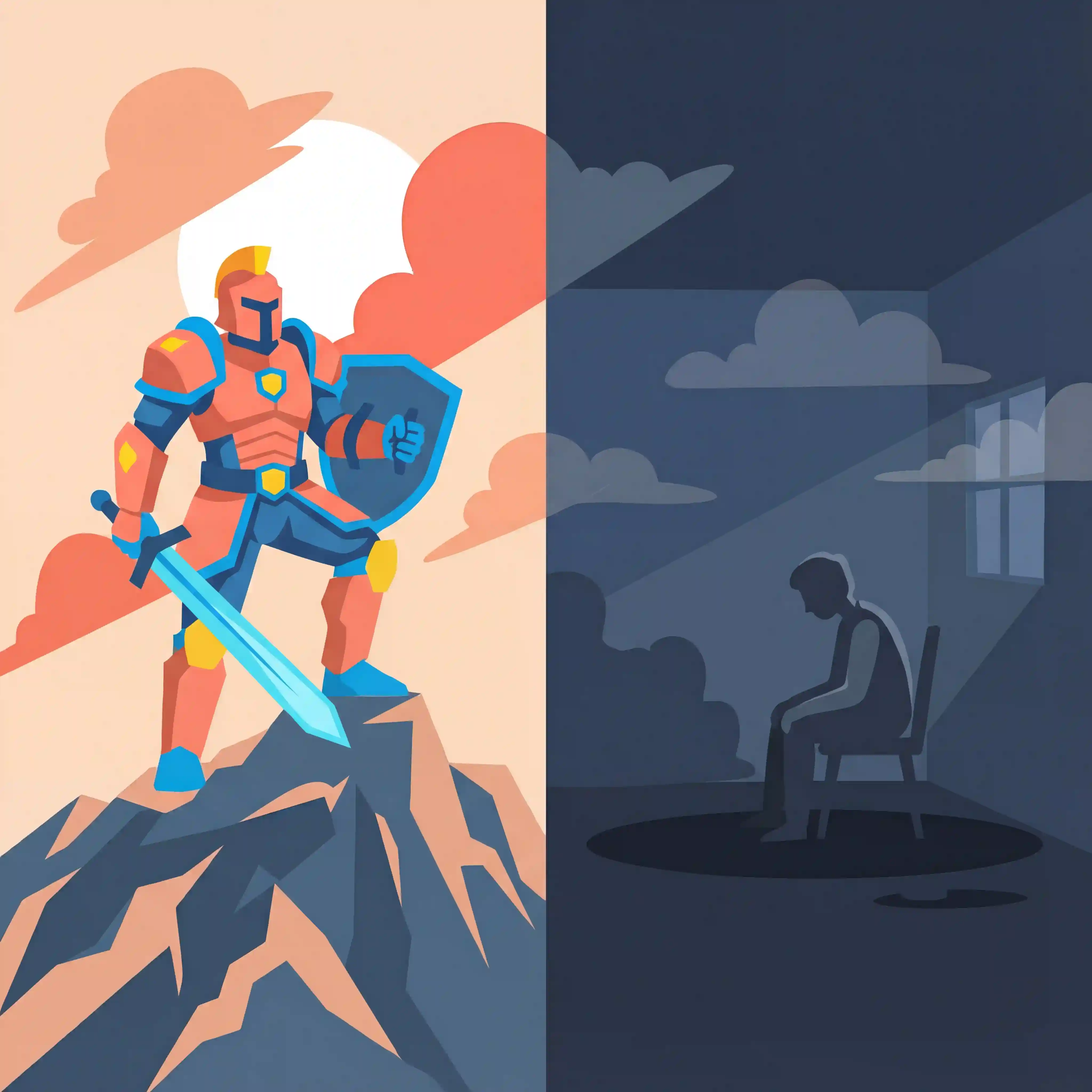
If you spend 30 hours a week on the server, that is 30 hours you didn’t spend:
- Building a career.
- Learning how to socialize without a headset.
- Learning a new skills, like a new language for example.
Real example: Take Jake, 28, who spent his early twenties grinding to Diamond rank in Valorant. He put in 40+ hours weekly—the equivalent of a full-time job. When he finally quit, he realized his former high school classmates had spent those same hours: one became a certified electrician earning $75k/year, another learned Spanish and traveled through South America, and a third built a side business that became their main income. Jake's gaming achievements? Worthless outside the game. His rank reset with every season, leaving nothing permanent behind.
This is the most insidious "bad" effect because it's invisible. You don’t feel the loss immediately. But over 5 or 10 years, the compound interest of missed opportunities becomes massive. You wake up at 30 or more, realizing you’re Grandmaster in game, but Bronze in life.
3. Prefrontal Cortex Atrophy (Emotional Stunting)
Your Prefrontal Cortex (PFC), handles impulse control, long-term planning, and emotional regulation.
Heavy gaming, particularly during adolescence and early adulthood, can impact the development of this region. When you are constantly reacting to stimuli (twitch reflexes) rather than planning and contemplating, your emotional regulation circuits can weaken.
Symptoms of a "Weak" PFC:
- Rage quitting: Inability to handle frustration.
- Impulsivity: Choosing short-term pleasure (gaming) over long-term gain (study/work).
- Social Anxiety: Struggling to read non-verbal cues because you're used to clear, binary game mechanics.
4. The Physical Debuffs
We know about carpal tunnel and eye strain. But the sedentary nature of gaming carries heavier risks that mess with your mental state too.

- Sleep Architecture Destruction: Blue light suppresses melatonin, but the adrenaline from a late-night clutch keeps your cortisol high. You might sleep for 8 hours but get zero deep restorative sleep. This leaves you anxious and foggy the next day.
- Metabolic Slowdown: Humans are designed to move. prolonged sitting signals your body to shut down metabolic processes, leading to lower energy levels and higher susceptibility to depression.
So, Is It Game Over?
Asking "how can video games be bad for you" is the first step to fixing the build.
The game is designed to hook you. Developers hire behavioral psychologists to ensure you don't log off. It’s not your fault you got hooked, but it is your responsibility to press the eject button.
You don’t necessarily have to quit forever (though for many, a cold turkey detox is the only way to reset). But you do need to recognize that you cannot grind for rank and grind for life with the same intensity.
The Patch Notes for Your Life:
- Acknowledge the drain: Admit that gaming is costing you more than just time.
- Reset your dopamine: Take a break to let your receptors heal so real life feels fun again.
- Build a new main: Find a real-world pursuit that gives you a similar sense of progression (gym, coding, martial arts).
Want to understand more about what's happening? Check out how to quit gaming cold turkey for a structured approach, or read Jean's personal story of breaking free after 10 years of addiction for real-world perspective
Ready to log out and start living?
— the app that helps you break free from gaming addiction and build a life you don't want to escape from.
References
This article is supported by peer-reviewed research and clinical insights:
- Dopamine and Video Game Addiction - Phuket Island Rehab
Understanding the Link Between Dopamine and Video Game Addiction - Neurological Research - Proceedings of the National Academy of Sciences
Neuroscience of Gaming Behavior (PNAS Study) - Blue Light Impact - Esports Healthcare
Blue Light Effects on Sleep and Performance - Developmental Effects - Brain & Life Magazine
How Video Games Affect Developing Brains of Children and Teens